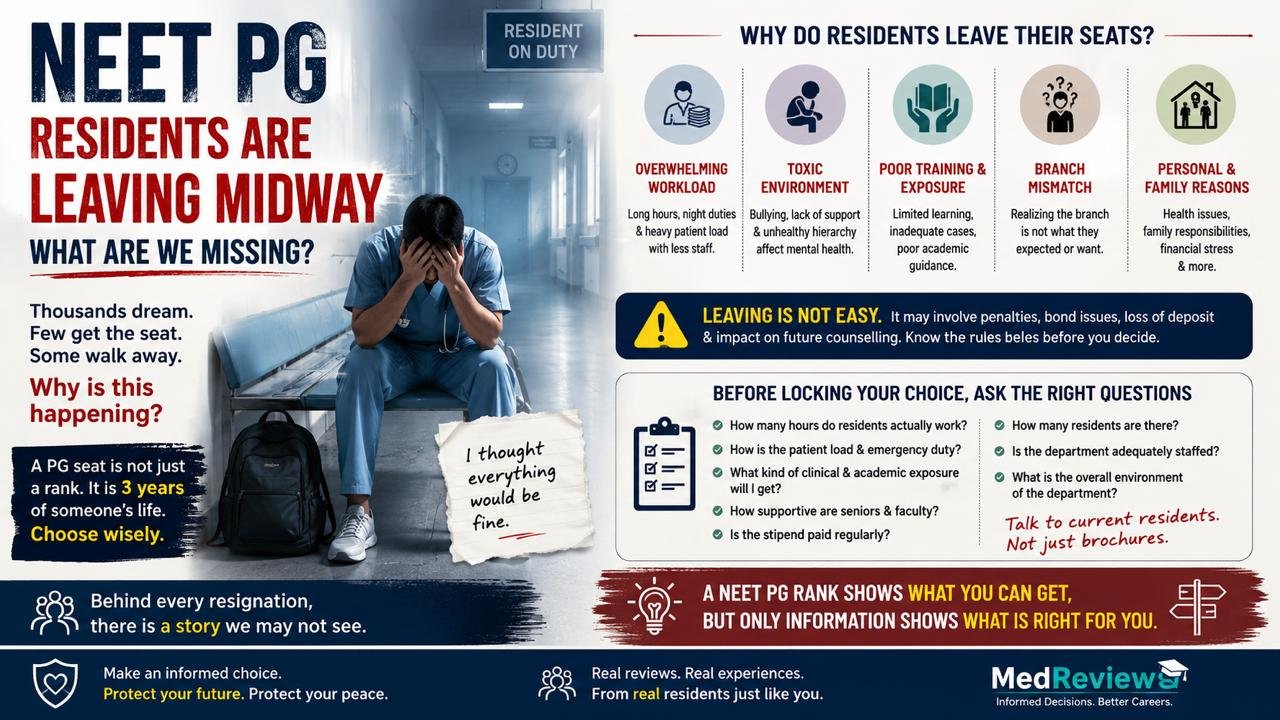
Every year, thousands of doctors work relentlessly to secure a postgraduate seat through NEET PG. After years of preparation, sleepless nights and immense competition, getting an MD, MS or DNB seat is often considered the fulfilment of a long-awaited dream. Yet, despite the intense competition for these seats, some residents are choosing to leave their postgraduate courses midway. This raises an important question: Why are doctors walking away from seats that many aspirants would do anything to get?
The answer is not always as simple as saying that the resident made a wrong choice. For some, the reality of residency turns out to be very different from what they expected before counselling. The workload may be overwhelming, clinical exposure may be inadequate, academic teaching may be poor, or the department environment may be toxic. In other cases, students realise only after joining that the branch they selected does not suit their interests, personality or long-term career goals. A branch may look attractive on paper because of its rank, reputation or earning potential, but the actual day-to-day experience of residency can be completely different.
The bigger problem is the information gap before counselling. Candidates often choose colleges and branches based on cutoff ranks, reputation, online information and advice from friends or counsellors. However, they may have very little understanding of what residency actually looks like inside a particular department. How much hands-on exposure will they receive? How many night duties are there? How supportive are the seniors and faculty? Is the stipend paid on time? What is the workload? Will they get adequate academic and procedural exposure? These are questions that can significantly influence whether a resident survives and thrives in a department, yet they are often difficult to answer before joining.
At the same time, leaving a PG seat should not be treated casually. Depending on the counselling authority, institution, state and stage of admission, resignation can have financial, contractual and administrative consequences. A resident should therefore understand the applicable rules, bonds and penalties before taking such a decision. But we also need to recognise that not every resident who leaves a seat is a seat blocker. Sometimes leaving is the consequence of a genuine mismatch, inadequate training, serious personal circumstances or an environment that the resident cannot reasonably continue in.
Ultimately, the solution is not simply to make it impossible for doctors to leave postgraduate training. The real solution is better information before the choice is made. Aspirants should speak to current residents and alumni, ask specific questions about workload, training, academic exposure and department culture, and look beyond the college's name or closing rank. A NEET PG rank tells you what seat you can get; it does not tell you where you will be happy or successful for the next three years. A postgraduate seat should be an informed career choice, not a decision made simply because "seat mil rahi hai, le lo."
If you want, I can also make this more emotional and hard-hitting for your MedReview/Medical Drafts audience, while keeping it suitable as a website blog.
This article provides essential insights into NEET PG / INI-CET counseling, choice filling rules, and campus feedback. For customized 1-on-1 counseling calls, book a session with our verified student residents directly.