1,120 PG Doctors Left Their Courses in Five Years: But How Many Had to Pay the Price?
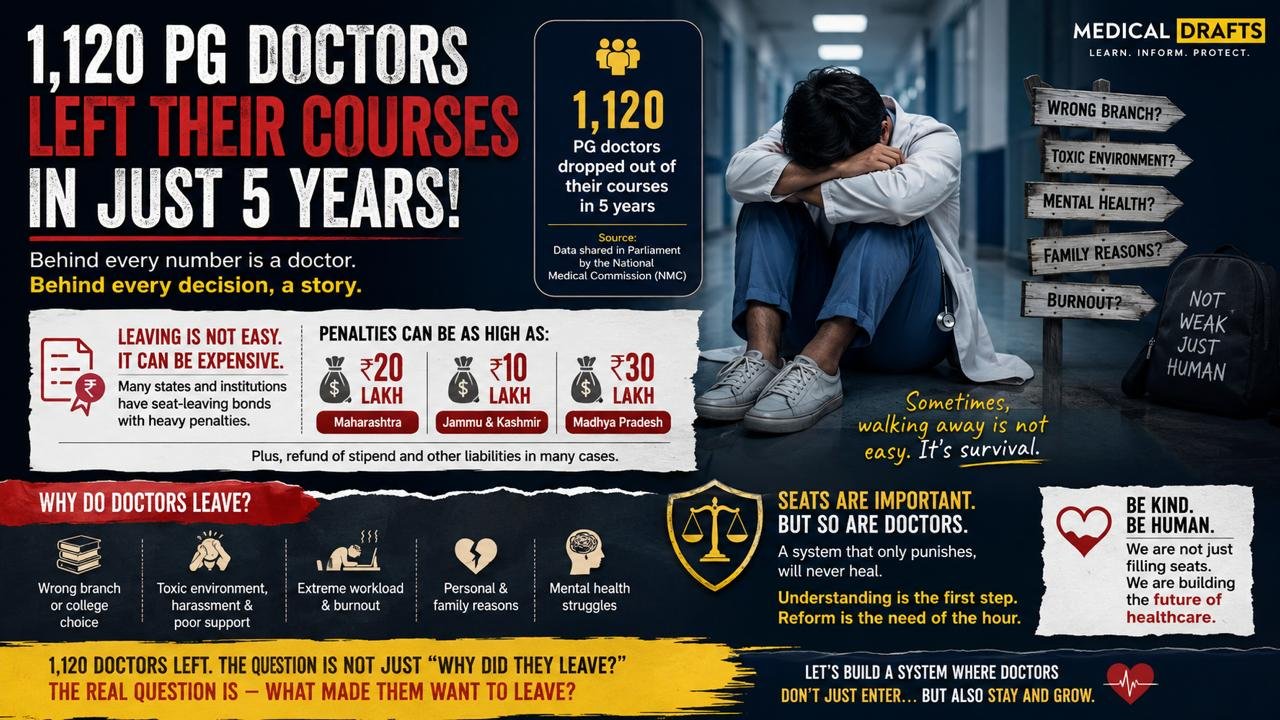
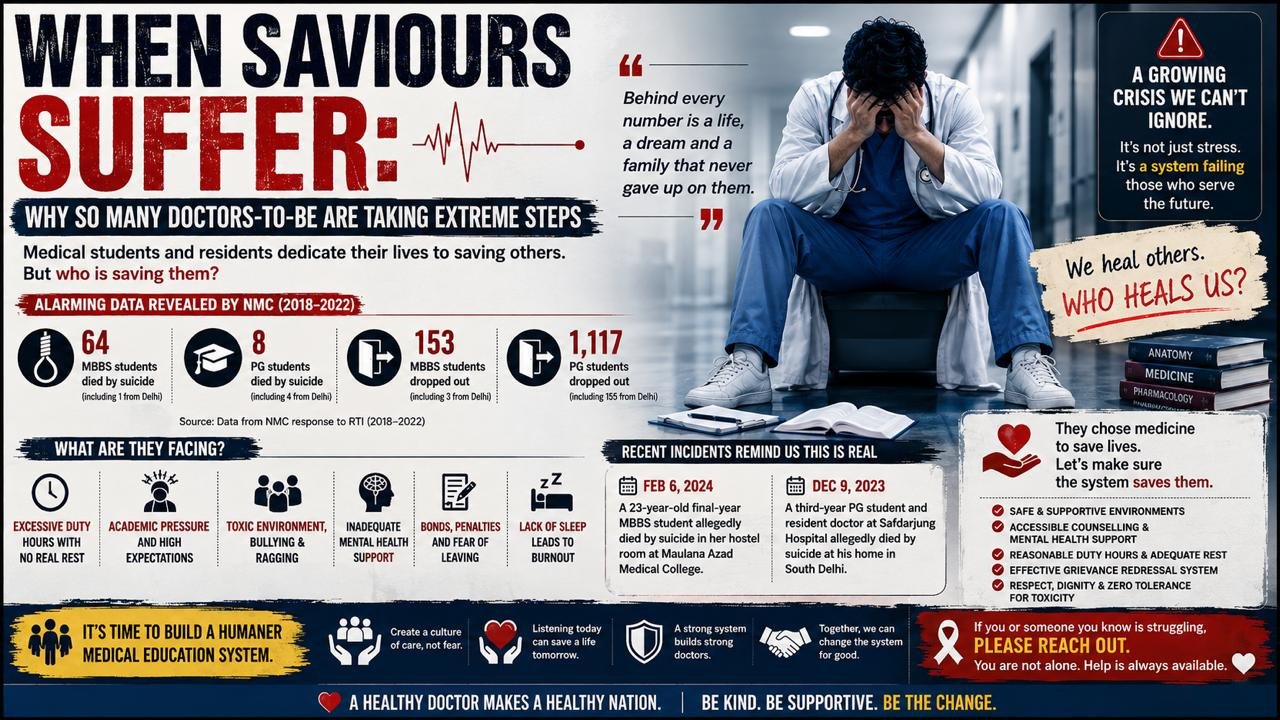
Postgraduate medical education in India is facing a disturbing reality that is often hidden behind numbers of seats, ranks and counselling rounds. According to data attributed to the National Medical Commission (NMC), 1,120 doctors pursuing postgraduate medical courses dropped out of their institutions over a period of five years. This means that more than a thousand doctors who had already secured highly competitive MD, MS or other PG seats ultimately chose to leave their courses. The figure becomes even more significant when we remember that these are not ordinary college admissions; these are doctors who have already completed MBBS and gone through one of the country's most competitive entrance examinations.
The situation becomes more complicated because leaving a postgraduate seat is not always a simple decision. In several states, candidates are required to sign seat leaving bonds, under which they may have to pay substantial penalties if they discontinue their course. For example, Maharashtra had a ₹20 lakh seat-leaving penalty, while admission documents of government medical colleges in Jammu and Kashmir provide for a ₹10 lakh penalty plus refund of stipend if an MD/MS resident leaves the course midway. AIIMS New Delhi has also considered increasing its discontinuation penalty for PG courses after noting that students leaving midway can leave seats vacant and cause financial losses to the institution.
But the most important question is: how many of these 1,120 doctors actually paid the penalty? At present, there does not appear to be a publicly available, consolidated national figure answering this question. The NMC figure tells us the number of PG doctors who dropped out, but not how many paid a seat-leaving fine, how much money was collected, or how many were able to leave without paying because of court orders, policy changes or differences between states. There are, however, documented individual cases where doctors have paid significant amounts. In one reported case, a postgraduate doctor paid ₹5 lakh after leaving a course, while another case before the Supreme Court involved a ₹30 lakh seat-leaving bond imposed on a PG doctor in Madhya Pradesh.
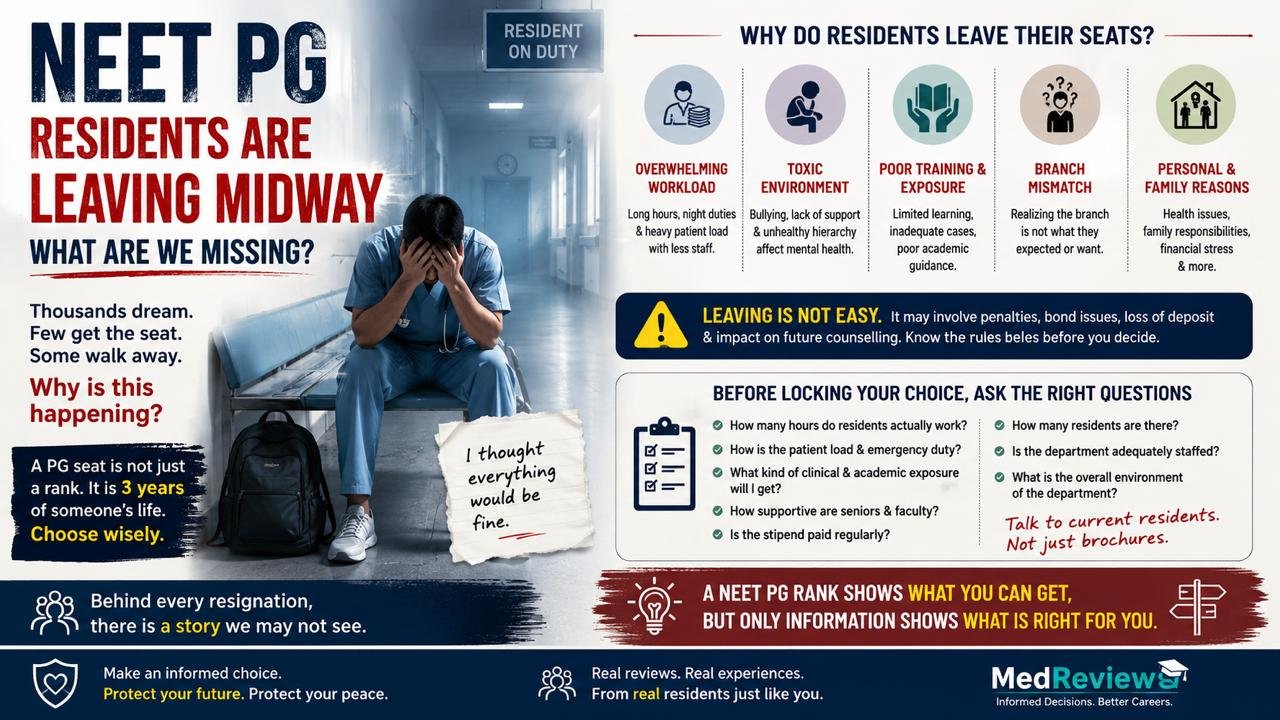
The numbers should therefore make us ask a larger question. Why are so many doctors leaving postgraduate training after spending years preparing for a PG seat? The reasons can range from choosing the wrong branch or college to unbearable workload, poor working conditions, harassment, inadequate clinical exposure, personal circumstances and mental-health difficulties. Maharashtra alone reported 85 postgraduate medical students discontinuing their studies in five years, according to state medical education department data. The same debate has prompted resident doctors' organisations to demand reconsideration or abolition of seat-leaving penalties, arguing that financial penalties can make residents feel trapped in an unsuitable or harmful training environment.
A postgraduate medical seat is undoubtedly valuable, and repeatedly leaving seats can disrupt counselling and deny another candidate an opportunity. But a system designed to prevent wastage of seats must also recognise that a doctor is not a machine locked into a three-year contract. Before imposing penalties running into lakhs of rupees, there should be a transparent mechanism to examine why a resident wants to leave and whether the circumstances are genuine. The fact that 1,120 PG doctors reportedly dropped out in five years should not merely be treated as a problem of vacant seats. It should trigger a deeper examination of what is happening inside postgraduate medical training. The real question is not only “Why did they leave?” but also “What made them want to leave in the first place?”
This article provides essential insights into NEET PG / INI-CET counseling, choice filling rules, and campus feedback. For customized 1-on-1 counseling calls, book a session with our verified student residents directly.